From evaluation to clinical insights: Nelli provides new information in Newcastle epilepsy project
Six months after Newcastle University began evaluating Nelli® in adults with epilepsy and intellectual disability, neurologist Dr Rhys Thomas is finding that home monitoring can reveal important information about his patients’ seizures that other investigations have not provided.
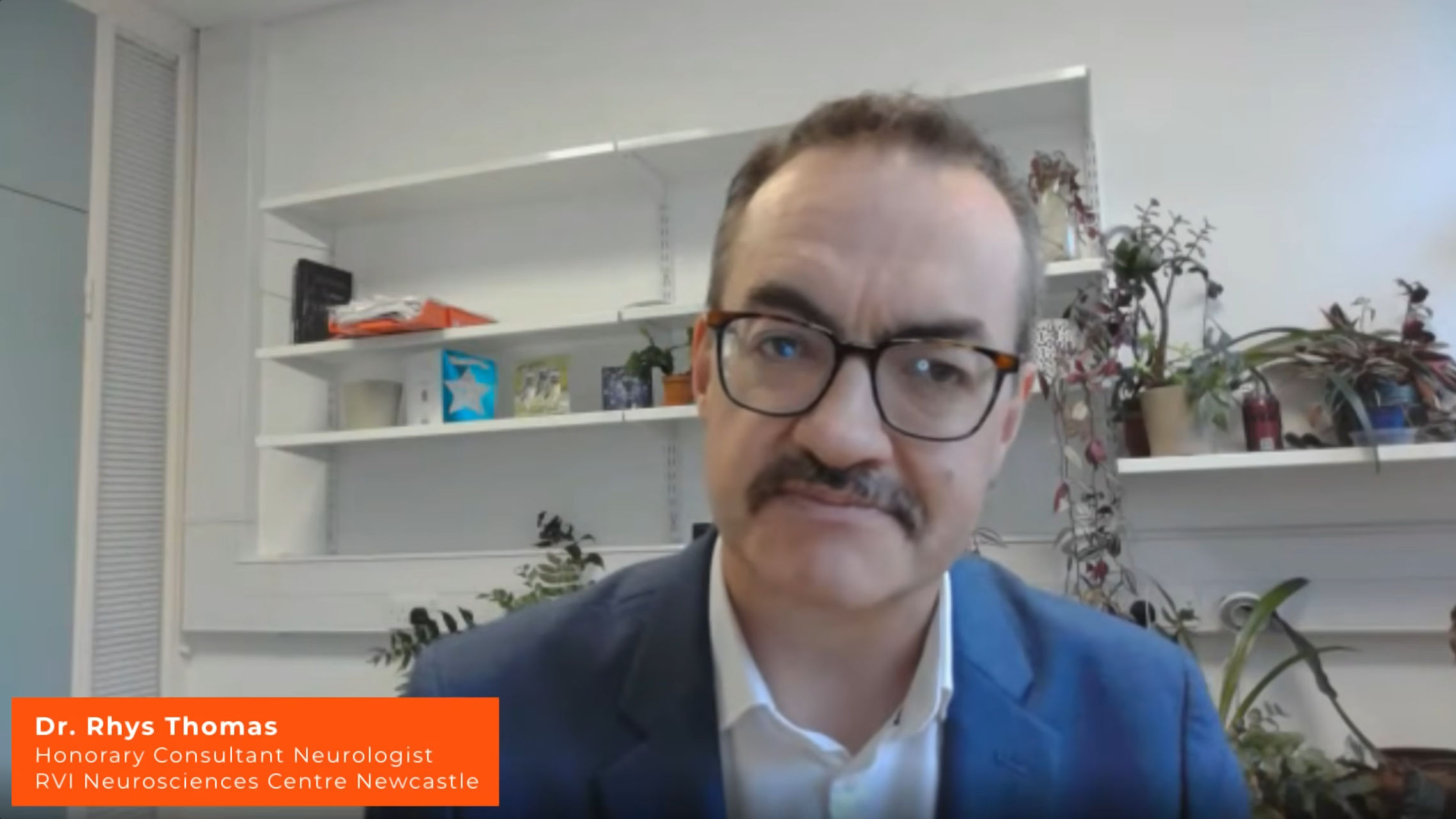
Short on time? Watch our 2.5-minute interview with Dr Rhys Thomas for his perspective on the project: https://youtu.be/altSR_9ymxs
Twenty of the planned 32 patients have now been monitored using Neuro Event Labs’ Nelli home video-audio monitoring system. For Dr Thomas, the monitoring has provided new information about the type and frequency of patients’ seizures and a better view of the events they experience in their everyday home environment.
The project also includes a health economic evaluation, which will assess the impact of using Nelli in this patient population. Together with evidence generated through previous work in the NHS, the Newcastle project is part of Neuro Event Labs’ continuing work to build the clinical and economic evidence needed to support wider adoption of Nelli in the UK.
The experience from Newcastle is also heading to an international scientific audience. An abstract led by Dr Thomas, “Scalable Home Video-Audio Monitoring (Nelli) in Adults With Epilepsy and Intellectual Disability,” has been accepted for presentation at the 2026 Annual Meeting of the American Epilepsy Society.
The information a neurologist needs – but cannot always get
Dr Rhys Thomas, Honorary Consultant Neurologist at Newcastle’s Royal Victoria Infirmary and a senior academic specialising in epilepsy at Newcastle University, works with people whose epilepsy can be particularly challenging to assess and treat.
For adults with epilepsy and intellectual disability, one of the fundamental challenges is obtaining reliable information about their seizures. What kinds of events are they experiencing? Which events are epileptic seizures? What types of seizures are they having? And how often? The answers are important for diagnosis and treatment, but they can be surprisingly difficult to obtain.
Dr Thomas is a strong advocate for genetic testing and uses EEG examinations in investigating epilepsy. By the time many patients reach him, MRI imaging has often already been performed. These are important diagnostic tools, but they do not necessarily tell him everything he needs to know about the seizures a patient experiences in everyday life.
This is where his experience with Nelli has been particularly interesting.
In an interview about the Newcastle project, Dr Thomas describes how Nelli has provided new information that had not emerged from genetic testing, EEG examinations or imaging.
Nelli combines video and audio monitoring in the patient’s home with AI-assisted analysis, allowing clinically relevant events to be identified from an extended period of everyday life. For Dr Thomas, this has provided helpful new information about both the types and frequency of seizures experienced by patients in the project.
And because monitoring takes place over a longer period in the home, he can learn more about events where they actually occur – in the patient’s normal everyday environment.
Seeing the patient beyond the clinic
This ability to observe what happens outside the clinical setting is particularly relevant for the patients Dr Thomas and his team are studying.
Adults with epilepsy and intellectual disability may not always be able to describe their own events reliably, while caregivers cannot necessarily observe or accurately characterise every event. At the same time, a clinical examination provides only a limited window into a condition that manifests intermittently in everyday life.
Longer-term home monitoring offers another source of information. Rather than replacing established investigations such as EEG, MRI or genetic testing, Nelli can complement them by helping clinicians build a more complete picture of what their patients are experiencing.
For Dr Thomas, the first 20 patients in the project are already demonstrating the clinical value of that additional perspective.
In the interview, he describes the diagnostic and patient benefits he has seen so far as clear – and says that, having seen what longer-term home monitoring can add, there is “no going back”. Hear more from Dr Thomas in this short video: https://youtu.be/altSR_9ymxs
Building the evidence for wider adoption
The Newcastle project is another step in Neuro Event Labs’ progress in the UK.
The collaboration began after Newcastle University successfully secured competitive funding from the National Institute for Health and Care Research (NIHR) through its i4i FAST programme to evaluate Nelli in adults with epilepsy and intellectual disability.
The project is designed to evaluate both the clinical impact of Nelli and its impact on healthcare resource use. No conclusions from the health economic evaluation have yet been drawn. However, the Newcastle work builds on previous experience with Nelli in the NHS. In an earlier NHSX-funded project, the use of Nelli was associated with average healthcare savings of approximately £500 per patient.
The Newcastle project now provides an opportunity to evaluate Nelli in a different patient population and clinical setting and to generate further clinical and health economic evidence. This evidence can help inform decisions about wider adoption of the technology in the UK.
When the collaboration began, Dr Thomas described the study as an opportunity to evaluate the capabilities of Nelli for some of the most vulnerable people his team cares for. Six months later, he can now speak from direct clinical experience.
With 20 patients monitored, the Newcastle team is building practical evidence of how longer-term home monitoring can complement established diagnostic methods and provide information that can be difficult to capture through conventional investigations or clinical appointments alone.
The work is taking place in the context of Newcastle’s National Centre for Neurotechnology and Neurorestoration, bringing together expertise from Newcastle Hospitals and Newcastle University to advance neurotechnology and its use inpatient care.
For Neuro Event Labs, the Newcastle collaboration represents an important part of a longer journey in the UK: working with NHS clinicians to evaluate Nelli in real-world care, generating clinical and health economic evidence, and using that evidence to support wider adoption.
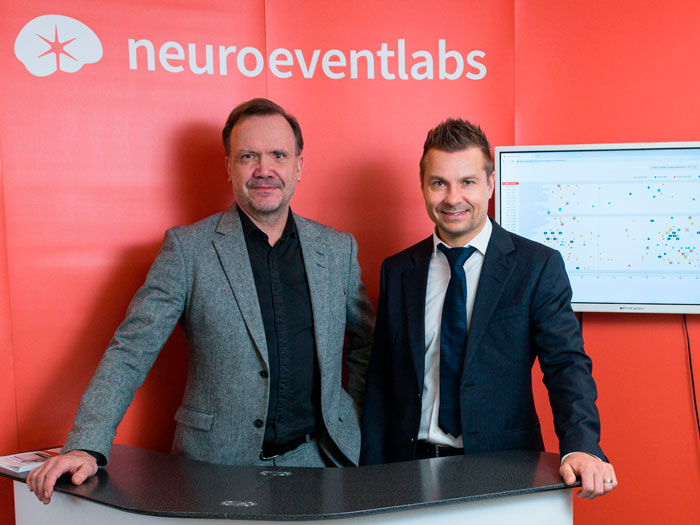
“It is highly rewarding to see Nelli providing Dr Thomas and his team with genuinely useful new information about his patients’ seizures. Together with the health economic evidence from our earlier NHS evaluation, the clinical benefits for clinicians and patients now emerging from Newcastle builds a strong foundation for the wider use of Nelli in the UK” says Kaapo Annala, COO at Neuro Event Labs.
With 20 of the planned 32 patients already monitored, the project continues. But Dr Thomas’ experience so far highlights something fundamental to epilepsy care: sometimes, to understand what is happening with a patient, clinicians need to be able to see what happens beyond the clinic.